
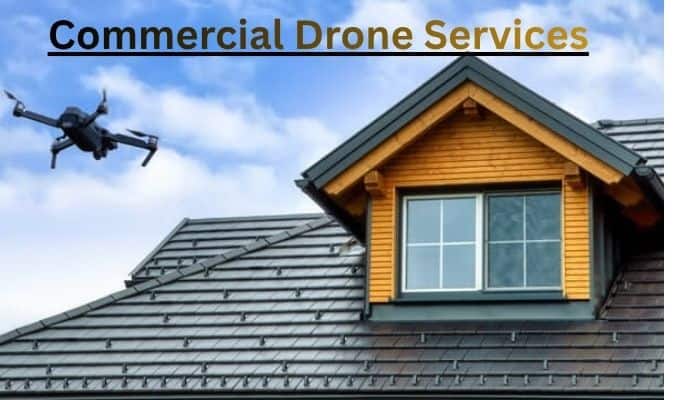
Drones are no longer just gadgets for hobbyists or content creators. Businesses across construction, property, agriculture, insurance, and infrastructure are increasingly using them to complete jobs faster, more safely, and often at a lower cost.
Commercial drone services cover everything from roof inspections and thermal imaging to mapping, agriculture, construction monitoring, and AI-powered data analysis. As drone technology becomes more capable and affordable, businesses are finding new ways to solve real-world problems using aerial data.
While the consumer drone market is crowded, commercial drone services continue to create opportunities for entrepreneurs willing to specialise in solving real-world problems.
Drone Services You Could Start Right Now
Roof Inspections & Surveys 🥇
One of the most accessible commercial drone services is carrying out roof inspections for homeowners, landlords, estate agents, roofing companies, and commercial property owners.
You can either operate as the drone pilot yourself or focus on generating leads and partnering with qualified local operators. Compared with traditional roof inspections, drones provide a faster, safer, and often more cost-effective solution.
Why we like it:
- Strong local demand
- Low startup costs
- Repeat work
- Excellent local SEO potential
- Easy to specialise
Ideal for: Entrepreneurs looking to build a local service business with recurring work.
Drone Data Processing 🥈
This is probably one of the most overlooked opportunities within the industry.
Rather than flying drones, businesses can specialise in transforming raw aerial imagery into valuable information.
Potential services include:
- AI-powered defect detection
- Roof condition reports
- 3D models
- Digital twins
- Survey analysis
- Asset management reports
As AI continues to improve, the value of analysing drone data may eventually become just as important as collecting it.
Solar Panel Inspections
As residential and commercial solar installations continue to grow, demand for efficient inspection services is increasing.
Drones allow operators to quickly inspect roof-mounted solar panels without the need for scaffolding or manual access. Thermal imaging can also identify faulty cells, hotspots, and performance issues that may not be visible to the naked eye.
This is a natural expansion for businesses already offering roof inspections.
Construction Progress Monitoring
Construction companies increasingly use drones to document projects from start to finish.
Regular aerial surveys allow project managers, developers, and clients to monitor progress, improve communication, and create visual records throughout the build.
Services can include:
- Weekly site updates
- Progress photography
- Time-lapse reporting
- 3D site models
Thermal Imaging
Thermal drones open up opportunities beyond standard photography by detecting issues invisible to traditional cameras.
Potential applications include:
- Roof heat loss
- Moisture detection
- Solar panel faults
- Electrical inspections
- Building diagnostics
While thermal equipment increases startup costs, it also allows businesses to charge significantly higher rates for specialist services.
Property Photography & Marketing
Drone photography remains one of the most common entry points into commercial drone work.
Estate agents, hotels, golf courses, holiday parks, and tourism businesses regularly require high-quality aerial imagery to showcase their properties and locations.
Competition is relatively high, so specialising within a particular industry can help differentiate your business.
Agricultural Surveys
Agriculture is becoming one of the fastest-growing commercial drone markets.
Potential services include:
- Crop health monitoring
- Field mapping
- Irrigation analysis
- Livestock monitoring
- Precision agriculture
While specialist knowledge is often required, the long-term commercial opportunity is significant.
Mapping & Surveying
Drones can rapidly produce detailed maps, terrain models, and 3D reconstructions for industries including construction, mining, civil engineering, and land development.
As software continues to improve, drone surveying is becoming an increasingly attractive alternative to traditional surveying methods for many applications.
Infrastructure Inspections
Bridges, wind turbines, railways, telecommunications towers, power lines, and industrial facilities all require regular inspections.
Drones improve safety by reducing the need for engineers to work at height while enabling faster inspections and better documentation.
Although this market has higher barriers to entry, contracts can be substantial.
Insurance & Damage Assessments
Following storms, flooding, fires, or other incidents, insurers and loss adjusters often require rapid visual assessments.
Drone inspections can provide high-resolution imagery to support claims processing while reducing the time and cost associated with manual inspections.
Ways to Build a Drone Business 🧱
There are several ways to build a business within the commercial drone industry. The right approach depends on your budget, technical experience, and long-term goals.
Operate Your Own Drone Service 🥇
For many entrepreneurs, the most straightforward route is to own and operate the drone business yourself.
This gives you full control over customer relationships, pricing, service quality, and future expansion. As demand grows, you can gradually add new services such as thermal imaging, mapping, inspections, or agricultural surveys.
However, this approach also requires the greatest upfront commitment. You’ll need suitable equipment, commercial insurance, the appropriate qualifications, and an understanding of aviation regulations.
Our advice: Start with a single niche, such as roof inspections or construction monitoring, rather than trying to offer every drone service from day one.
Lead Generation Business 🥈
One of the easiest ways to enter the market is by generating leads for established drone operators.
Instead of flying drones yourself, your role is to build a website, rank locally, run advertising campaigns, or develop relationships with businesses seeking drone services, before passing qualified enquiries to licensed operators.
This approach has lower startup costs, avoids the need for specialist equipment and certifications, and can often be expanded into multiple locations or service niches.
Software / SaaS 🥉
Rather than operating drones yourself, another route into the industry is building software that helps drone businesses operate more efficiently.
Potential opportunities include:
- Flight planning and scheduling
- Client booking systems
- Fleet management dashboards
- Inspection and reporting software
- AI-powered image analysis
- Maintenance tracking
- Compliance and flight logging
- Customer portals
As the commercial drone industry grows, operators are likely to rely on an increasing number of digital tools to manage flights, customers, reports, and regulatory requirements.
While this is one of the more technically challenging opportunities, successful software businesses can benefit from recurring subscription revenue and serve operators across multiple industries.
Consultancy & Training
As commercial drone adoption grows, experienced operators may find opportunities helping businesses integrate drone technology into their operations.
Potential services include:
- Operational consultancy
- Staff training
- Workflow design
- Compliance guidance
- Equipment selection
While this is likely to suit experienced professionals rather than beginners, it could become an increasingly valuable specialist service.
Why It’s Growing 📈
Commercial drones are becoming an increasingly practical tool for businesses across a wide range of industries. Improvements in hardware, software, AI, and regulation mean tasks that once required scaffolding, specialist access equipment, or significant manual labour can now often be completed faster, more safely, and at a lower cost.
Several long-term trends are driving growth:
- Improved battery life and flight times
- Higher-quality cameras and sensors
- Thermal imaging becoming more accessible
- AI-powered image analysis and reporting
- Lower equipment costs
- Growing acceptance of drones across industries
- Businesses seeking safer inspection methods
- Regulatory developments supporting commercial drone operations
Rather than asking “Can a drone replace a person?”, many businesses are now asking:
“Can a drone complete this task more safely, efficiently, and cost-effectively?”
That shift in thinking is creating new opportunities across inspection, surveying, monitoring, mapping, agriculture, and infrastructure.
Typical Startup Costs 💰
The cost of entering the drone industry varies significantly depending on the business model you choose.
- Lead generation and marketing businesses can often be started with relatively little upfront investment, focusing primarily on a website, branding, and marketing.
- Operating your own drone service requires additional investment in equipment, insurance, software, training, and the appropriate commercial qualifications.
- Specialist services, such as thermal imaging, mapping, or infrastructure inspections, typically involve higher equipment costs but also command higher-value contracts.
One of the industry’s advantages is that many businesses can start with a single service before gradually expanding into additional markets as revenue grows.
Emerging Opportunities 🌱
Beyond the opportunities right now, here are some that might emerge in the future and are worth exploring:
Drone-in-a-Box
Self-contained drone systems capable of launching, charging, and landing automatically, allowing remote inspections with minimal human involvement.
Autonomous Inspections
Routine inspections carried out automatically using predefined flight paths and AI-assisted reporting.
Beyond Visual Line of Sight (BVLOS)
As regulations evolve, drones capable of operating beyond the pilot’s visual range could unlock entirely new commercial applications.
AI Inspection Reports
Software capable of automatically detecting defects, identifying issues, and generating professional reports from captured imagery.
Drone Fleet Management
Platforms designed to manage multiple drones, operators, maintenance schedules, compliance, and customer reporting.
Marine & Underwater Robotics
While aerial drones are becoming increasingly common, autonomous marine and underwater vehicles are also emerging as commercial opportunities.
Automated Security Patrols
Businesses using autonomous drones to patrol industrial sites, business parks, warehouses, and critical infrastructure.
Delivery Services
While still developing, autonomous drone delivery may create opportunities in logistics, healthcare, and remote communities.
Digital Twins
Using drone data to create detailed digital replicas of buildings, infrastructure, and construction sites for planning and maintenance.
Swarm Inspections
Multiple drones working together to inspect large assets such as wind farms, solar farms, railways, and industrial facilities more efficiently.
Competition 🆚
Competition Level: Medium-High
Commercial drone services have become increasingly common, particularly in photography and videography. However, many regional markets remain underserved, especially for specialist services such as roof inspections, thermal imaging, construction monitoring, and infrastructure surveys.
Businesses that specialise in solving a specific problem rather than offering general drone services are likely to stand out more effectively and face less direct competition.
Startup Difficulty 🤔
Difficulty: 7/10
Starting a commercial drone business involves more than purchasing a drone. Depending on the services you offer, you’ll need training, insurance, suitable equipment, and an understanding of aviation regulations.
Some services, such as roof inspections or property photography, are relatively straightforward to enter, while specialist areas like infrastructure inspections, thermal imaging, or mapping require additional investment and expertise.
Accessibility 🚪
Accessibility: 7/10
Commercial drone services are accessible to motivated beginners, but there are barriers to entry beyond simply buying a drone. Operating legally and professionally requires training, insurance, and compliance with local regulations.
For those without a desire to fly drones, alternative routes such as lead generation, marketing, or software development offer lower-barrier entry points into the industry.
Opportunity Score 🔢
9/10
Why it scores highly:
✅ Growing commercial adoption
✅ Wide range of service opportunities
✅ Strong repeat business potential
✅ High-value B2B customers
✅ AI creating new opportunities
✅ Easy to specialise
✅ Strong local SEO opportunities
Commercial drone services continue to expand across industries including construction, agriculture, energy, insurance, and property. With new applications emerging alongside advances in AI and automation, the market offers multiple routes to build a scalable business.
Things To Watch Out For ⚠️
- Regulations – Commercial drone operations must comply with aviation rules, which can evolve over time.
- Weather Dependence – Poor weather can delay jobs and affect scheduling.
- Equipment Costs – Specialist services may require more advanced drones, sensors, and software.
- Insurance & Liability – Appropriate insurance is essential, particularly when operating near people or valuable property.
- Local Competition – General drone photography is competitive, so specialising can be a significant advantage.
Future Outlook 🔮
Commercial drones are evolving from specialist tools into everyday business assets. As AI, automation, and regulation continue to advance, new service categories are likely to emerge beyond today’s inspection and photography markets.
Rather than competing in crowded general drone services, entrepreneurs who specialise in solving a specific problem and adapt as the technology evolves are likely to be best positioned for long-term success.